MEXICO · AGAVE · CRAFT
One plant.
A world of
character.
Every tequila tells the story of how it was made. Follow the choices that turn blue agave into the flavors in your glass.
Explore field to bottle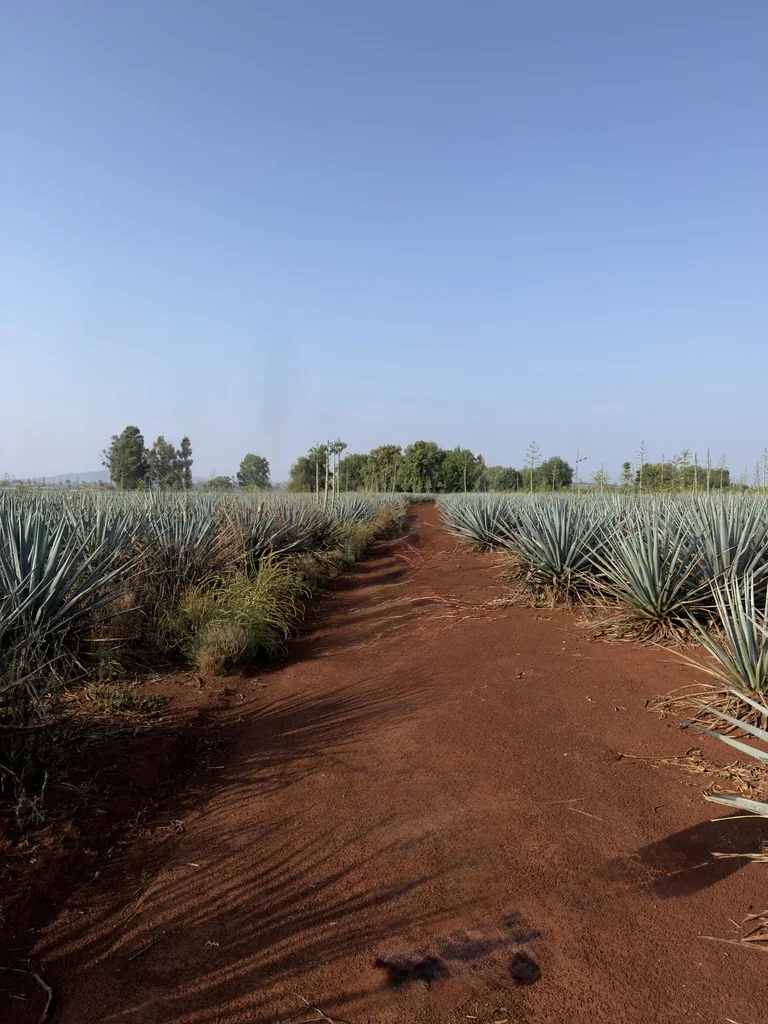
Age adds a chapter.
It doesn’t write the whole story.
01 / FIELD TO BOTTLE · THE COMPLETE JOURNEY
Every choice leaves
a possible signature.
Move through the production sequence and follow how plant material, process conditions, measurements and human judgment become the tequila in the glass.
This is a guide to the major flavor-relevant decisions, not one mandatory recipe. Production routes differ: some extract before cooking, some include fibers, and some skip wood maturation. Linked producer practices are examples; research findings apply to the conditions studied.
THE READING ROOM
Grounded in the source.
Official standards define requirements. Primary research tests particular conditions. Producer materials document practices and stated rationales. Plausible explanations are labeled; they are not presented as proven flavor outcomes.
- Consejo Regulador del TequilaProduction, categories and classes · official overview
- NOM-006-SCFI-2012§§ 4.1, 4.36 and 5 · official tequila standard
- Yeasts, temperature and aromaFermentation research · 2008
- Agave age, growing location and yeastFermentation research · 2009
- Understanding tequila terroirAccessible regional context · secondary reporting; useful for terminology, not a controlled flavor law
- Fortaleza AñejoProducer’s tasting notes · illustrative example
- Volatile compounds during oak maturationTequila maturation in French oak · research, 2019
- Fortaleza Still StrengthAgave-forward tasting notes and bottling strength · producer example
- Planting, selection & harvestingPatrón · close penca trim and harvest evaluation; producer rationale
- Preparing the agavePatrón · piece size and cogollo removal; producer practice
- Agave cooking & Maillard compoundsMancilla-Margalli & López, 2002 · primary cooking research
- Milling the agavePatrón · extraction methods and wash-water concentration
- Agave age evaluated at industrial scaleFoods, 2021 · specific formulation conditions and analytical methods
- Brix: The essential knowledgeMETTLER TOLEDO · measurement principles and complex samples
- Brix during fermentationAnton Paar · density, refractive index and alcohol interference
- Nitrogen sources in tequila fermentationArrizon & Gschaedler, 2007 · rate and volatile-compound changes
- Fermentation conditions & bagazoPatrón · yeast, temperature, acidity and fibers
- Yeast and bacterial diversity in tequila fermentationAldrete-Tapia et al., 2020 · community dynamics and fermentative behavior
- Microbial communities across agave distilleriesJara-Servin et al., 2025 · broader traditional-agave evidence, not a citrus experiment
- The role of distillation on tequila quality2005 primary study · fraction composition, copper and cuts
- The aging processPatrón · cask history, cellar conditions, entry proof and barrel selection
- Blending and bottlingPatrón · parallel distillates and final proofing; producer example
- Selective color removal for cristalino tequilaPrimary carbon-adsorption research · filtration selectivity
- Spirit measurementsAnton Paar · analytical alcohol, extract and turbidity capabilities
- Tequila: sabor a MéxicoMexico’s agriculture ministry · oven liquids and bitter runnings
- Native yeast strains & the chemical profilePrimary agave fermentation research · yeast selection and industrial process context
- Diagnosing fermentation stressUC Davis · general yeast-management principles; wine context, not a tequila recipe
- Agave growth and harvestPatrón · carbohydrate reserves, flowering and harvest timing
- CRT laboratory servicesOfficial analytical services · composition and conformity testing
- Methanol production kinetics during agave cookingAgave cooking study · stem and leaf fractions; mezcal evidence that supports a multi-factor mechanism
- Homoisoflavanones from Agave tequilana WeberMorales-Serna et al., 2010 · Molecules 15(5), 3295–3301 · laboratory analysis of Agave tequilana Weber plant material using chromatographic and spectroscopic methods
Reviewed October 6, 2026. Educational sensory descriptions are possibilities, not chemical identification from taste.